
An average trip to Portugal costs about €165 per person per day before international flights. That is the useful middle figure, not a fantasy number pulled from an old backpacker forum. It suits a traveler sleeping in decent hotels, eating proper meals, using trains or metro where it makes sense, paying for a few sights, and adding the odd tour when it actually improves the day. A careful budget traveler can sit closer to €65–€90 per day. A comfort-focused trip with boutique hotels, private transfers, wine tastings, and peak-season dates can push beyond €250–€400 per day with almost no drama.
Portugal still offers good value by Western European standards. It is not the cheap little loophole some older guides keep selling. Lisbon hotels have climbed. Porto is busier. The Algarve can bite hard in summer. The Douro Valley gives a lot back, honestly, but once private transport, quinta visits, and wine-estate stays enter the plan, the bill stops pretending to be modest.
Portugal Trip Cost at a Glance
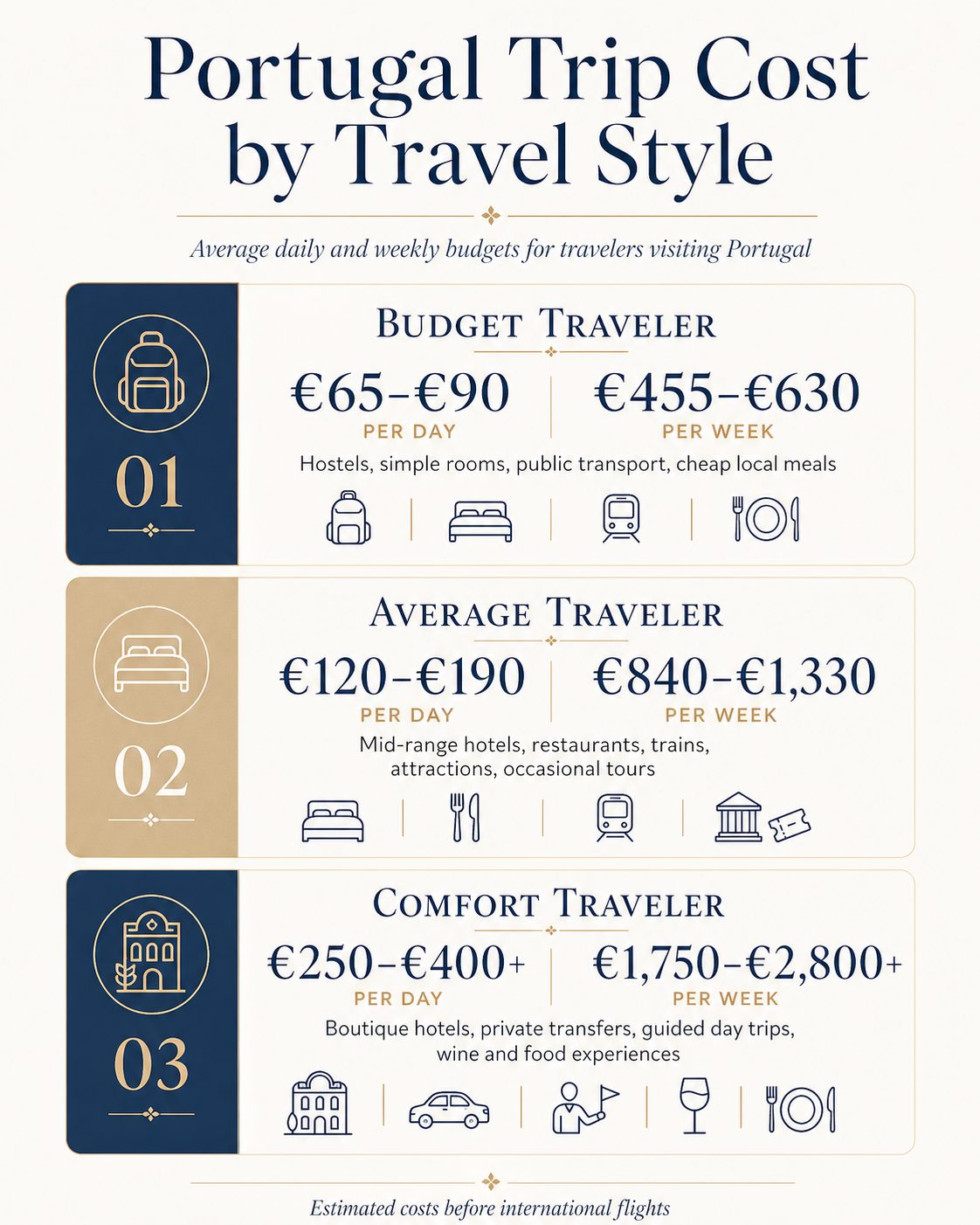
The cleanest way to price Portugal is to sort travelers by rhythm, not just by hotel category. Budget travelers ride the metro, eat lunch in local cafés, use viewpoints as entertainment, and pay for fewer organized experiences. Mid-range travelers add hotels, restaurants, museums, trains, and maybe a food tour or a Sintra day. Comfort travelers start leaning on private transfers, boutique stays, guided days, wine tastings, and restaurants chosen for atmosphere as much as price.
| Travel style | Daily cost per person | 7-day cost per person | Typical trip style |
|---|---|---|---|
| Budget | €65–€90 | €455–€630 | Hostels, simple rooms, public transport, cheap meals, fewer paid sights |
| Average / mid-range | €120–€190 | €840–€1,330 | Good hotels, restaurants, trains, attractions, occasional tours |
| Comfort / luxury | €250–€400+ | €1,750–€2,800+ | Boutique hotels, private transfers, guided day trips, wine and food experiences |
These numbers do not include international flights, and that separation matters. Someone flying from London or Madrid may grab a cheap fare with hand luggage and feel smug by lunch. Someone coming from New York, Toronto, or Chicago can spend more on airfare than on several days of hotels and food once they land in Portugal.
How Much Does One Week in Portugal Cost?
For one person, a one-week Portugal trip usually lands around €1,155 before flights if the trip is average rather than bare-bones. That assumes a normal travel pattern: private room or hotel, restaurant meals most days, some paid sightseeing, trains or local transport, and a little slack for coffee, snacks, taxis, and the small costs nobody writes down until the card statement arrives.
For two people, the total does not double neatly across every category. Food and attraction tickets do. Hotel rooms do not. This is why Portugal can feel much better value for couples than for solo mid-range travelers. Split one €140 room between two people and the math suddenly relaxes.
| Trip length | Budget | Average | Comfort |
|---|---|---|---|
| 3 days | €195–€270 | €360–€570 | €750–€1,200+ |
| 7 days | €455–€630 | €840–€1,330 | €1,750–€2,800+ |
| 10 days | €650–€900 | €1,200–€1,900 | €2,500–€4,000+ |
Daily Portugal Travel Budget Breakdown
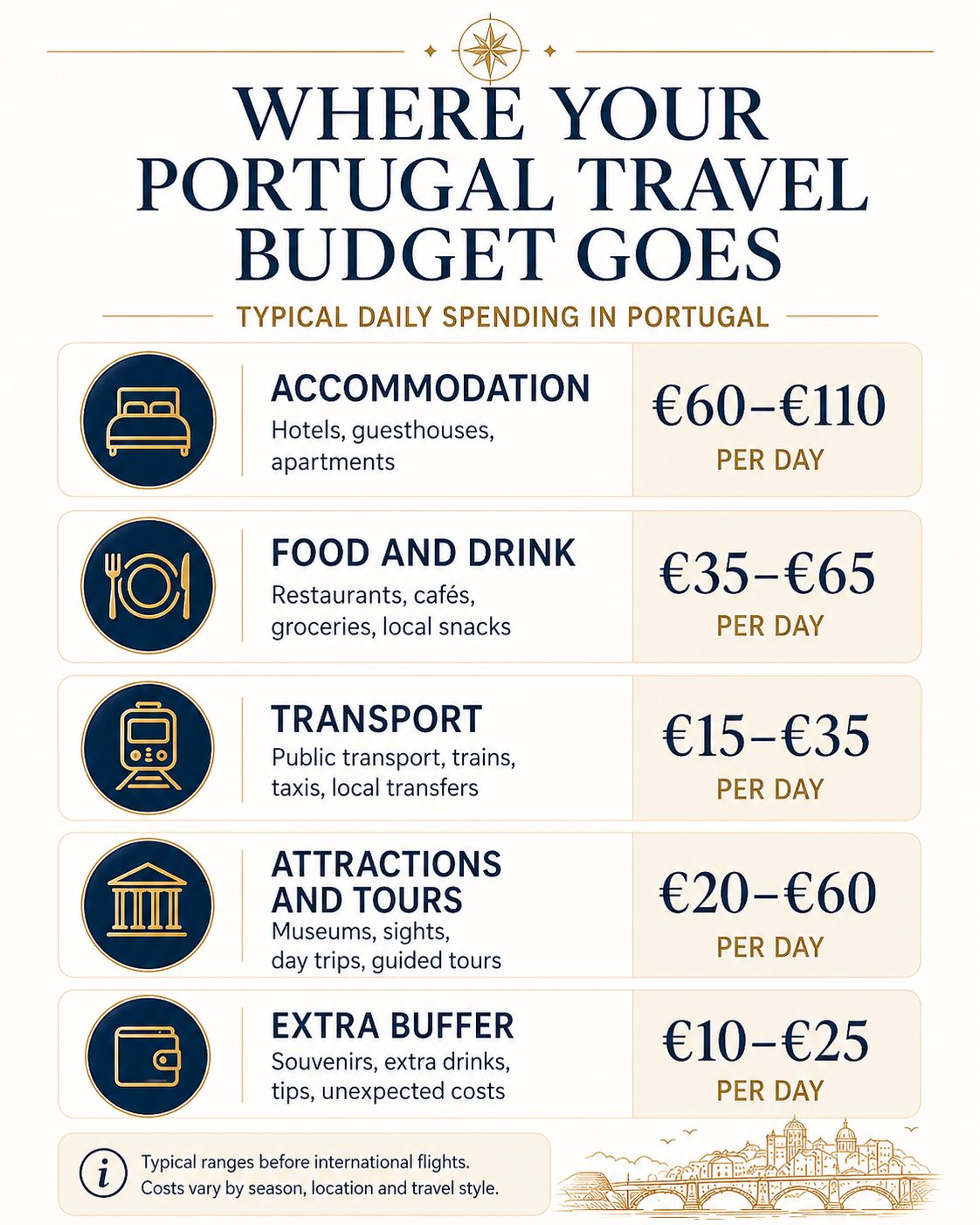
The average daily budget in Portugal is not one tidy expense. It is a stack. Accommodation usually takes the biggest bite, then food, then transport, then sights and tours. The order shifts with the route. A Lisbon city break spends more on hotels and restaurants. A Douro Valley trip spends more on transfers, tastings, and wine-country logistics. Madeira or the Azores may need a rental car. The Algarve can be gentle in February and completely different in August.
| Category | Budget traveler | Average traveler | Comfort traveler |
|---|---|---|---|
| Accommodation | €25–€60 | €60–€110 | €130–€250+ |
| Food and drink | €20–€35 | €35–€65 | €70–€130+ |
| Transport | €5–€15 | €15–€35 | €40–€120+ |
| Attractions and tours | €5–€20 | €20–€60 | €80–€200+ |
Accommodation Costs in Portugal
Accommodation is where Portugal’s price shift shows most clearly. Affordable guesthouses, hostels, and simple rooms still exist, but central Lisbon and Porto are no longer cheap by default. In July, August, September, and around major holidays, a room that looked sensible in winter can suddenly feel painfully ordinary for the money.
Budget travelers can lean on hostel dorms, basic guesthouses, and private rooms outside the famous streets. Mid-range travelers should expect simple but comfortable hotels, often around €100–€180 per night for a room in popular areas. Boutique and luxury stays can move beyond €250 per night quickly, especially in Lisbon, Porto, the Douro Valley, Comporta, Madeira, and the Algarve.
For Lisbon and Porto, staying near a metro station is often smarter than paying extra to sleep directly on the most famous street.
Solo travelers should pay attention here. A €140 hotel room split between two people is €70 each. The same room for one person is still €140. That one detail can make a solo mid-range trip feel far more expensive than expected.
Food and Drink Prices in Portugal
Food can still be one of Portugal’s best-value pleasures if you eat with a little local sense. A coffee and pastry breakfast can cost only a few euros. A simple lunch menu, often called a prato do dia, can still be very fair. Tascas, bakeries, market counters, and neighborhood restaurants keep the daily budget from swelling.
The expensive version starts when every meal happens on a tourist square, every dinner includes cocktails, and every lunch turns into a long sit-down meal in central Lisbon, Porto’s riverfront, or a resort town in the Algarve. Fine, if that is the trip you want. Just count it.
- Simple breakfast with coffee and pastry: often around €3–€7
- Local lunch or prato do dia: often around €8–€15
- Casual restaurant dinner: usually around €15–€30 per person
- Mid-range dinner with wine: often around €30–€55 per person
- Fine dining or tasting menus: usually €70–€150+ per person
Wine can be excellent value compared with northern Europe or the United States. A simple glass of Portuguese wine may cost less than a soft drink in some tourist cities elsewhere. Port tastings, wine bars, cellar visits in Vila Nova de Gaia, and Douro experiences sit in a different category. Those are experiences, not just drinks.
Transportation Costs in Portugal
Portugal is easy to travel without a car if the trip focuses on Lisbon, Porto, Coimbra, Braga, Aveiro, Faro, or other rail-connected cities. Public transport in Lisbon and Porto is affordable, and trains between the main cities are usually cheaper than renting a car once fuel, tolls, parking, and insurance enter the bill.
Lisbon’s metro, buses, and trams can keep sightseeing costs low, especially if you use day passes on transport-heavy days. A taxi or Uber from the airport into the city is convenient, yes. The metro is much cheaper. That difference matters for anyone trying to keep the whole trip near €100 per day.
Intercity trains are usually the sweet spot for Lisbon to Porto. The journey is fast enough, simple enough, and far better than wrestling with a rental car in two cities where parking can become a stupid little tax on your mood. Car rental makes more sense for the Algarve, Alentejo, rural wine regions, Madeira, the Azores, or a slower road trip.
Attraction, Tour, and Day Trip Costs
This is where many Portugal budgets start leaking. A traveler can walk Lisbon’s viewpoints, ride public transport, visit churches, sit by the river, and spend very little. Add Jerónimos Monastery, Belém Tower, a tram ride, a food tour, Sintra, Pena Palace, and a fado dinner, and the same trip changes shape fast.
Sintra is the classic example. The train from Lisbon is affordable, but the day rarely stops there. Palace tickets, transfers between sights, lunch, coffee, another monument, and maybe a guide can turn a cheap day trip into a full sightseeing budget. Worth it? Often. Free? Not even close.
- A well-planned Sintra day if it is your first Portugal trip
- A good food tour early in Lisbon or Porto
- A Douro Valley wine day with transport included
- Timed tickets for major sights in peak season
- Short tourist rides priced far above normal transport
- Private transfers used inside cities for no real reason
- Last-minute summer hotel bookings
- Overpacked tour days with too many rushed stops
Portugal Trip Cost by Destination
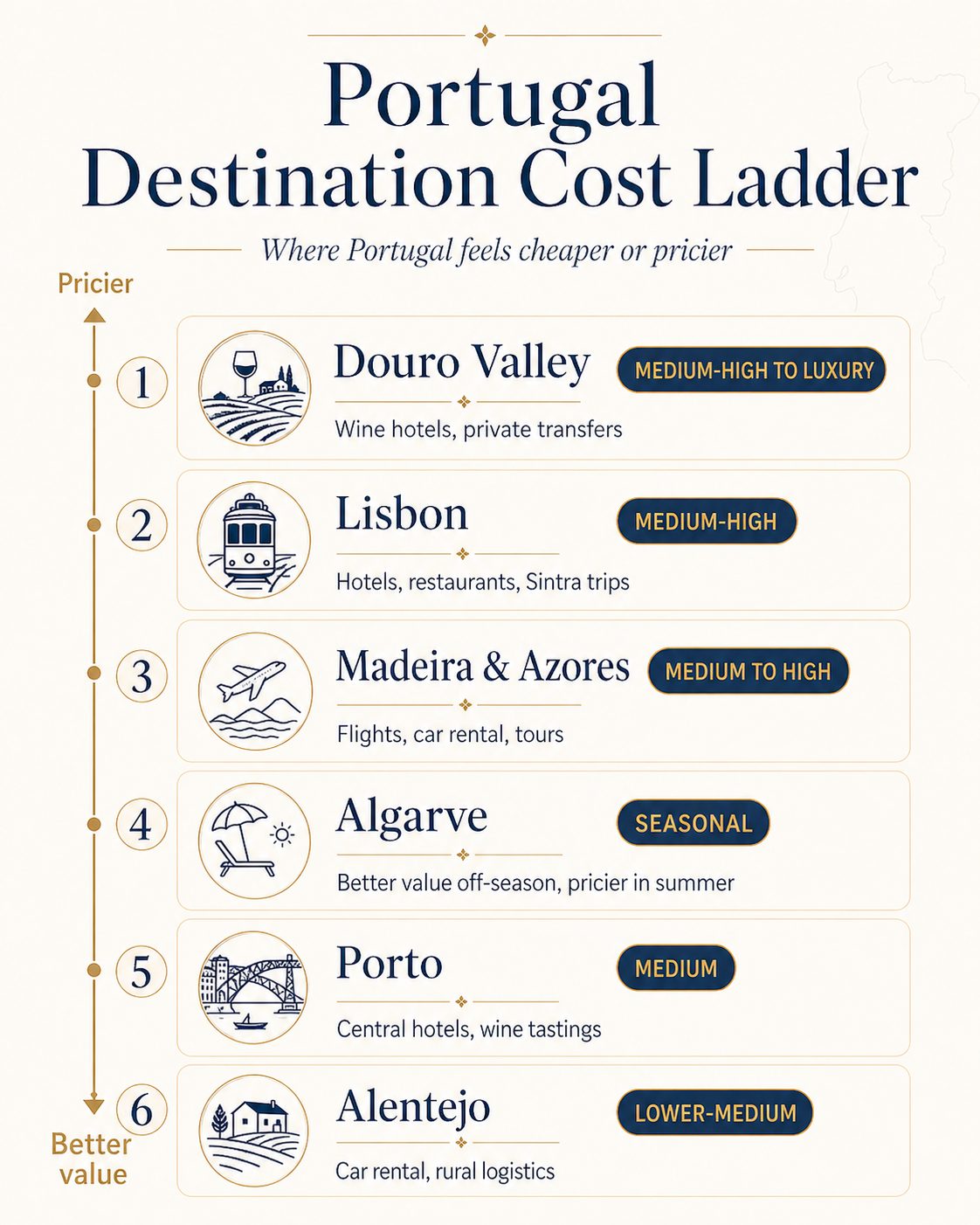
The average cost of Portugal changes with the route. Lisbon is the obvious first stop, but not the cheapest version of the country. Porto can be better value, though central rooms and wine tourism have become pricier. The Algarve in August is not the Algarve in February. The Douro Valley can feel luxurious even when the wine is rustic and the schist hills are quiet.
Lisbon is usually the most expensive stop on a first Portugal itinerary. Hotels, restaurants, airport transfers, Sintra day trips, and paid monuments push the daily budget above the national average.
Porto is often a little easier on the budget than Lisbon, especially outside peak dates. The catch is wine tourism: cellar visits, tastings, river cruises, and Douro trips can raise spending quickly.
The Algarve can be reasonable in shoulder season and expensive in summer. Beach towns, family resorts, car rental, boat trips, and last-minute hotel bookings are the main budget movers.
Madeira and the Azores need their own logic. Daily food and hotel costs can be reasonable, but flights, car rental, guided outdoor activities, and island logistics add pressure. Alentejo can be wonderful value for food and slow travel, though many itineraries work better with a car.
When Is Portugal Most Expensive?
Portugal is most expensive when the weather is best, school holidays are active, and everyone wants the same coast, hotel terrace, or sunset table. July and August are the obvious high-cost months, especially in the Algarve and popular beach areas. September can also run high because the weather still behaves and demand does not disappear.
Lisbon and Porto have become year-round city-break destinations, so winter is not empty. Still, January, February, March, November, and early December often give better hotel value than late spring or peak summer. April, May, June, September, and October are beautiful months, but they are not secret anymore.
For many travelers, March, April, November, and early December offer the best balance of lower hotel prices, usable weather, and fewer crowds.
How to Save Money on a Portugal Trip
The best way to save money in Portugal is not to make the trip miserable. It is to stop paying premium prices for things that add very little. A room beside a good metro line can beat a cramped room in the most obvious tourist zone. A local lunch can be better than a restaurant with a laminated menu in six languages. A train can be easier than a rental car for city-to-city travel. I will die on that hill.
- Book hotels early for Lisbon, Porto, Algarve, and Madeira.
- Use trains between major cities instead of renting a car for the full trip.
- Save car rental for Algarve, Alentejo, Douro, Madeira, or Azores sections.
- Eat bigger lunches at local restaurants and keep dinners simpler.
- Stay near public transport instead of paying only for the most central address.
- Choose one strong paid tour rather than several weak ones.
- Travel outside July, August, and major holiday periods when possible.
- Keep a small daily buffer for taxis, snacks, luggage storage, and entry fees.
Is Portugal Still Cheap?
Portugal is still affordable compared with many Western European destinations, but “cheap” is no longer the right blanket word. A traveler using hostels, trains, bakeries, local cafés, and free viewpoints can keep costs low. A traveler booking central hotels, private tours, summer beach stays, wine experiences, and restaurant dinners will not feel like they have found a budget loophole.
The better word is value. Portugal gives a lot back when the trip is planned well: strong public transport in the main cities, useful regional trains, generous food culture, walkable historic centers, affordable coffee, local wine, Atlantic scenery, and small towns where the bill still feels sane. The country now rewards early planning more than casual optimism.
Sample Average Portugal Budget for 7 Days
For a realistic first trip, imagine this route: four nights in Lisbon, two nights in Porto, and one flexible night for Sintra, Coimbra, or a Douro-style add-on. The traveler uses public transport inside cities, takes the train between Lisbon and Porto, eats in restaurants but not luxury places, visits several paid sights, and books one guided experience.
| Category | Estimated cost | Notes |
|---|---|---|
| Accommodation | €420–€770 | Based on shared mid-range rooms or modest hotels |
| Food and drink | €245–€455 | Cafés, casual lunches, restaurant dinners, wine or drinks |
| Transport | €90–€180 | Metro, local transport, train between cities, occasional taxi |
| Attractions and tours | €120–€300 | Museums, monuments, Sintra, food tour, wine tasting, or guided walk |
| Extra buffer | €75–€150 | Snacks, luggage storage, tips, small purchases, price surprises |
That puts many average travelers somewhere around €950–€1,850 for a week before flights, depending on hotel style and how many paid experiences they add. The lower end requires restraint. The upper end appears naturally if the trip includes better hotels, private transfers, wine tourism, and peak-season rates.
FAQ
How much money do I need for 7 days in Portugal?
For an average trip, budget about €1,155 per person for one week before international flights. A budget traveler can manage closer to €455–€630, while a comfort-focused traveler may spend €1,750–€2,800 or more.
Is €100 a day enough in Portugal?
Yes, but only with careful choices. €100 a day can work if you stay in budget accommodation, use public transport, eat simple meals, and limit paid tours. It is tight for central Lisbon hotels, restaurant dinners, Sintra, taxis, and summer travel.
How much does Portugal cost for two people?
A one-week average Portugal trip for two people usually costs around €2,300–€2,700 before flights. Couples often get better value than solo travelers because hotel rooms, taxis, car rental, and private tours can be shared.
Is Lisbon expensive to visit?
Lisbon is expensive by Portuguese standards but still reasonable compared with many major Western European capitals. Hotels, restaurants, airport transfers, Sintra trips, and popular monuments are the main reasons Lisbon often costs more than the national average.
What is the cheapest way to travel around Portugal?
The cheapest practical option is public transport inside cities and trains between major destinations. Renting a car is useful for rural regions, islands, beach-hopping, and wine country, but it is usually unnecessary for Lisbon and Porto city stays.
What is the cheapest month to visit Portugal?
January, February, March, November, and early December are usually better for lower hotel prices. The cheapest month depends on destination, but winter and early spring are normally much cheaper than July, August, and September.
Is Portugal cheaper than Spain or Italy?
Portugal can be cheaper than many parts of Spain and Italy, especially for coffee, wine, local meals, and public transport. The gap is smaller in Lisbon, Porto, the Algarve, and high-demand coastal or wine regions during peak season.
Final Takeaway
An average Portugal trip costs about €165 per person per day before flights, but that number hides the real story. Portugal can still be a smart-value destination if you use trains, choose hotels carefully, eat locally, and travel outside peak season. It can also become expensive fast if the itinerary leans into central hotels, private tours, summer beaches, wine estates, and last-minute bookings.
The country is not overpriced. It is just no longer underpriced. Plan with that in mind, and the budget starts to make sense.
You have not enough Humanizer words left. Upgrade your Surfer plan.