
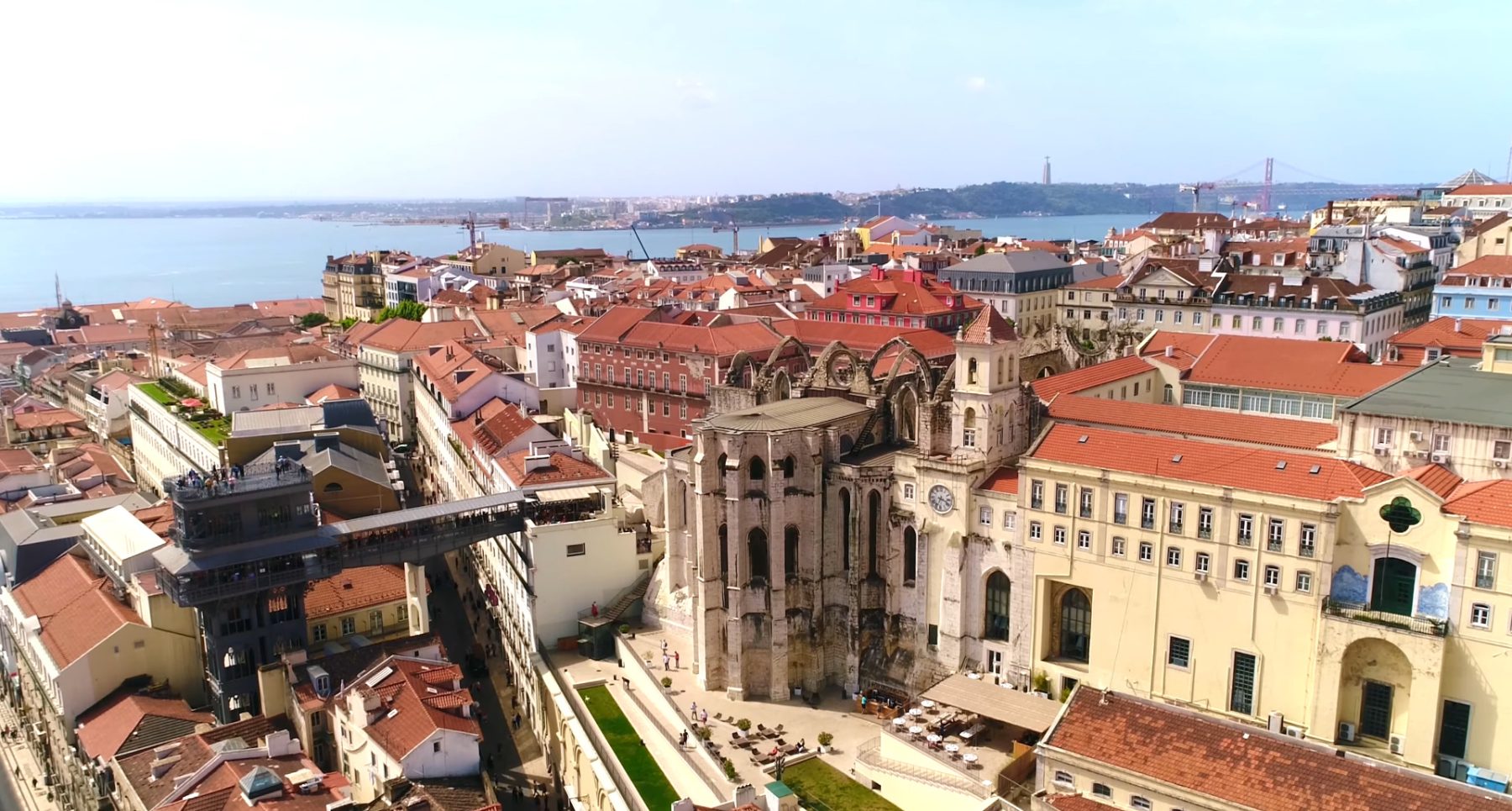
Lisbon is not the cheap little Atlantic capital travelers still remember from dusty blog posts and backpacker folklore. That city existed, or at least fragments of it did. You could arrive with a half-formed plan, find a central room without swallowing hard, eat properly for very little, and lose an afternoon between azulejo streets, miradouros, bakeries, and trams that felt like public transport rather than moving theatre.
Pieces of that Lisbon remain. A coffee can still be kind to your wallet. The metro works. A pastel de nata is not going to wreck the holiday fund. Some of the city’s best moments still cost nothing: the first broad flash of the Tagus from a hilltop viewpoint, the uneven climb through Alfama, the pale river light out in Belém, the shriek of a tram taking a corner it has no business taking.
But Lisbon is no longer cheap in the loose, lazy way people say it. Accommodation has climbed hard. Central neighborhoods price themselves with confidence. Rooftop bars, polished restaurants, Sintra add-ons, boutique hotels, private transfers, and peak-season weekends can make the city feel expensive very quickly. The honest answer is not “Lisbon is cheap” or “Lisbon is expensive.” Lisbon is affordable for daily basics and costly when you start buying convenience.
Lisbon is moderately expensive by Portuguese standards, though still easier to manage than many major Western European capitals. Budget travelers can work with about €70–€95 per person per day, while a comfortable mid-range trip usually lands around €140–€220 per person per day. Accommodation is the cost that bites first, followed by peak-season dates, Sintra day trips, rooftops, trendy restaurants, private tours, and taxis.
How Expensive Is Lisbon for Tourists?
Lisbon sits among the pricier places to visit in Portugal, mostly because it is the capital, the main city-break magnet, and a natural stop on wider European itineraries. It has the airport, the cruise ships, the remote-worker crowd, the weekend-break traffic, the restaurants that know their tiles will end up on Instagram, and the hotels that understand exactly what a central address is worth.
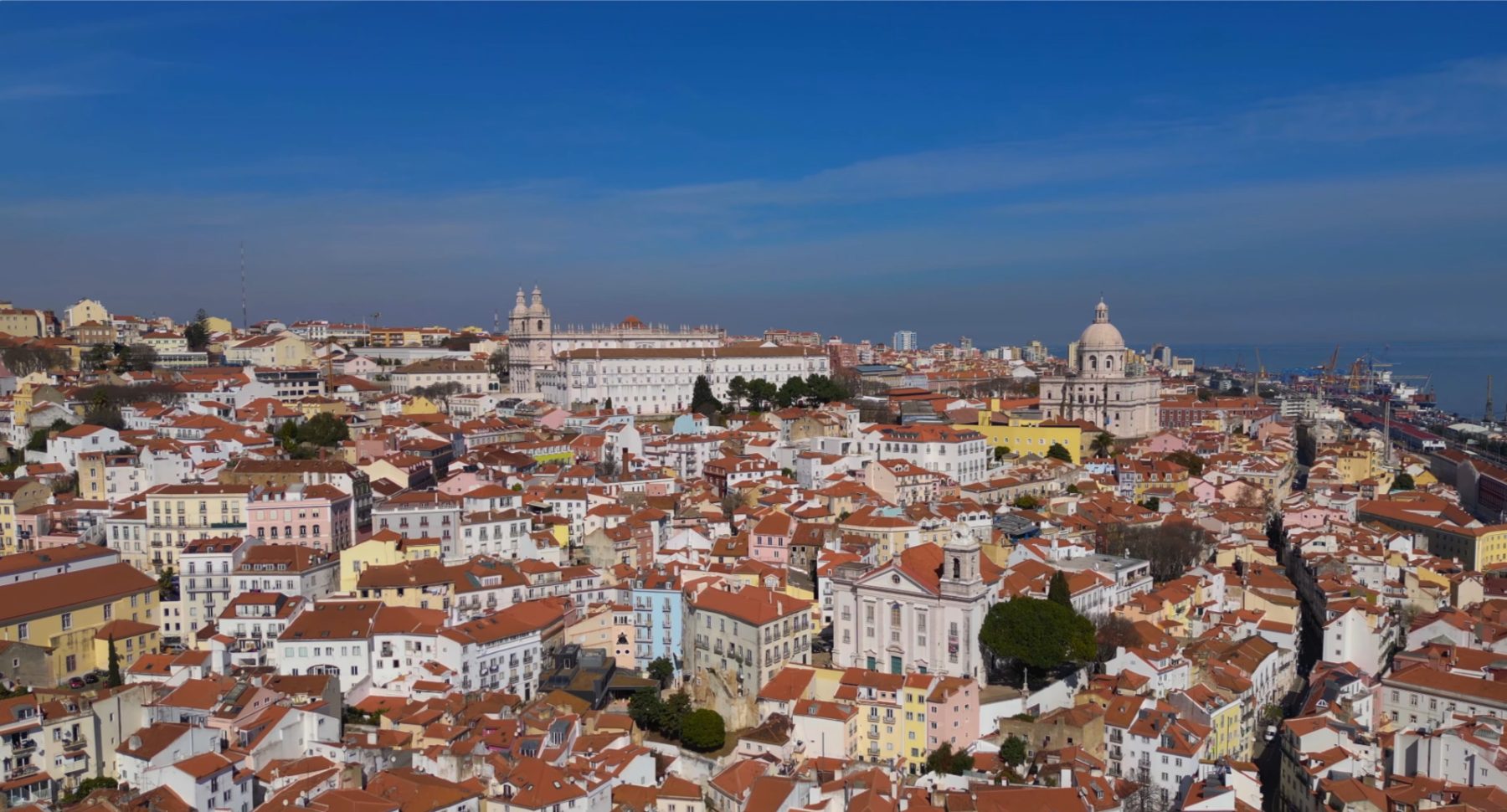
That does not make Lisbon outrageously expensive. Everyday tourist spending still sits below many Western European capitals. A careful traveler can eat simply, use public transport, walk a lot, and spend whole days around viewpoints and neighborhoods without paying for attraction after attraction. Someone who books late, sleeps in the historic core, eats around the main squares, takes taxis out of habit, and adds a packed Sintra day with multiple tickets will meet a different Lisbon entirely.
The most useful way to read the city is this: Lisbon is not expensive because every small thing costs too much. It becomes expensive when the larger costs pile up. Hotel. Season. Location. Sintra. Rooftop drinks. Airport transfer. A few casual rideshares because the hills looked softer on Google Maps. Then the old “Lisbon is cheap” line starts to sound faintly absurd.
Lisbon Daily Budget: How Much Money Do You Need?
A realistic Lisbon budget depends less on how many sights you tick off and more on where you sleep, where you eat, and how much ease you decide to buy. A hostel traveler can still keep the city under control. A couple in a good central hotel starts from a different number before dinner has even entered the conversation.
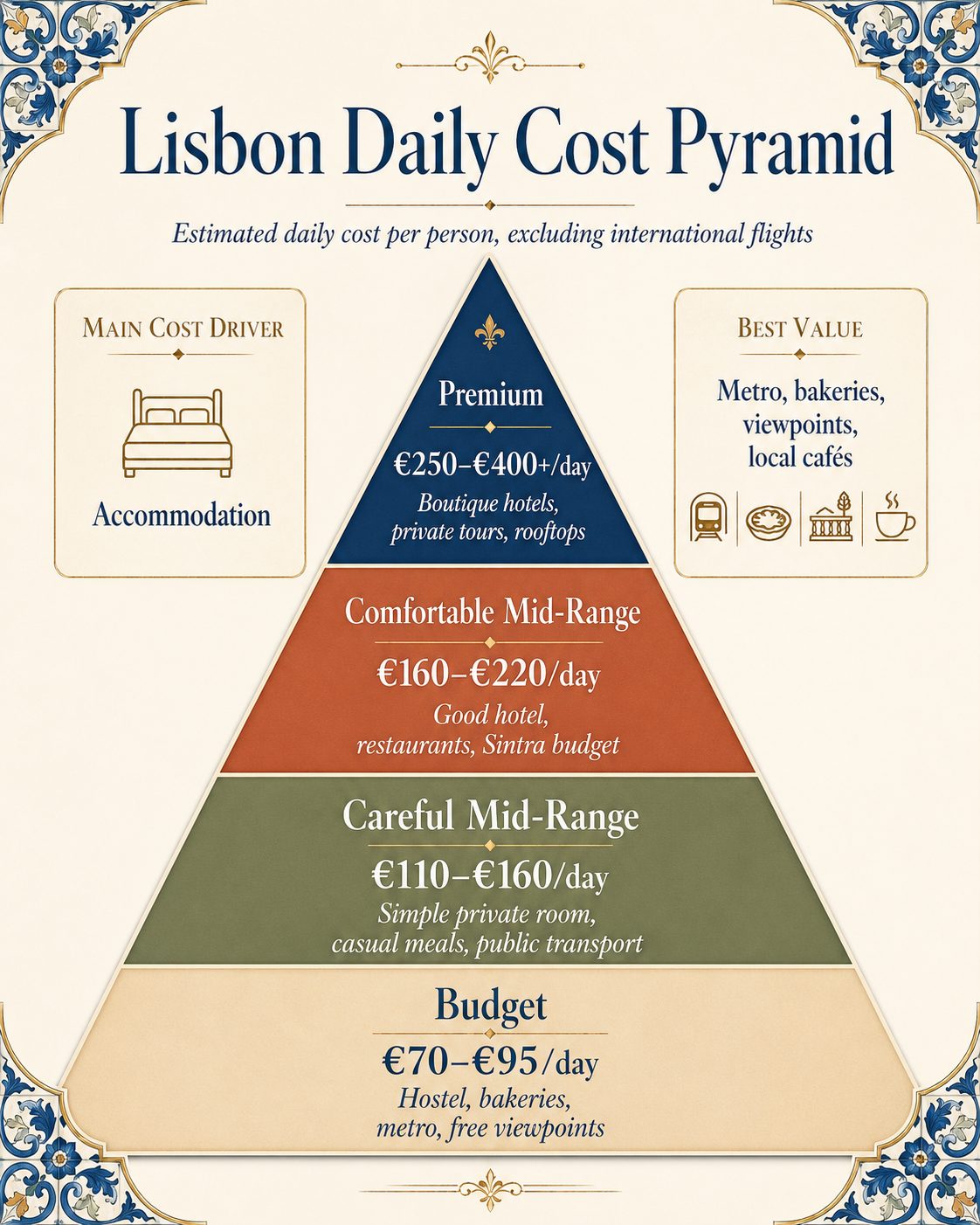
For most visitors, the daily budget falls into four useful bands.
| Travel style | Daily budget | What it usually covers |
|---|---|---|
| Budget | €70–€95 | Hostel or basic stay, bakeries, local meals, metro, free viewpoints |
| Careful mid-range | €110–€160 | Simple private room, casual restaurants, public transport, several paid sights |
| Comfortable mid-range | €160–€220 | Good hotel, restaurants, museums, Sintra budget, occasional taxi |
| Premium | €250–€400+ | Boutique hotel, private transfers, rooftops, guided tours, better restaurants |
Budget Traveler: Around €70–€95 per Day
A budget Lisbon trip still works if accommodation stays simple. That usually means a hostel bed, a basic guesthouse, or a private room outside the most aggressively priced central pockets. Food can remain sensible with bakeries, local lunch spots, markets, supermarkets, and casual restaurants away from the obvious visitor stream.
The good part: Lisbon gives budget travelers plenty to do. Viewpoints cost nothing. Walking through Alfama, Graça, Baixa, Chiado, Mouraria, and the riverside does not require a ticket. Public transport helps when the hills become irritating. They will.
Mid-Range Traveler: Around €140–€220 per Day
This is where many first-time visitors end up. A decent hotel or private apartment, breakfast out, one or two restaurant meals, public transport, a paid sight, maybe a taxi back after dinner, and one Sintra or Belém-heavy day. It sounds normal because it is. Lisbon handles this style well, but hotel location decides whether the budget feels fair or bloated.
A careful mid-range traveler can stay closer to €140–€160 per day by choosing a modest hotel near the metro and eating locally. A comfortable mid-range traveler in a better hotel, with more restaurant meals and a full Sintra day, can drift toward €200–€220 per day without doing anything remotely extravagant.
Premium Traveler: €250–€400+ per Day
Lisbon now has enough boutique hotels, tasting menus, Portuguese wine bars, rooftop terraces, private guides, and design-led apartments to absorb a premium budget without breaking sweat. Avenida da Liberdade, Chiado, Príncipe Real, and river-facing hotels can push accommodation into a very different bracket.
This kind of trip can be worth it if you want smooth logistics and stronger food or cultural experiences. I think Lisbon does premium better than people expect. But it should not be confused with budget Lisbon. Private transfers, guided Sintra days, rooftops, and boutique stays are convenience purchases. Pleasant ones. Not cheap ones.
What Makes Lisbon Feel Expensive?
Lisbon feels expensive when the trip is built around centrality and ease. The city itself still offers value, but the easiest version of the city is rarely the cheapest version.
Central Accommodation
Accommodation is the main reason Lisbon feels expensive. Baixa, Chiado, Alfama, Avenida da Liberdade, Príncipe Real, and Cais do Sodré are popular because they save time and give travelers the Lisbon they came for: tiled façades, old lanes, restaurants, viewpoints, nightlife, river access, and walkability. They also carry the pricing that follows demand.
Alfama can look romantic on a booking page, but think about luggage, stairs, taxis, and noise. Baixa is practical but tourist-heavy. Chiado and Príncipe Real have style and position, then charge for both. Avenida da Liberdade feels smoother and more polished, with prices to match.
Peak Season and Weekend Demand
Lisbon does not need July and August to feel busy. Spring weekends can already push rates up. May, June, September, Easter, major events, long weekends, and holiday periods can all lift hotel prices. Summer adds heat and demand, especially when Portugal becomes part of a longer Spain-and-Portugal or beach-plus-city itinerary.
If your dates can move, shoulder season helps. April, early May, late September, October, and parts of November usually give a better balance of price and comfort. Winter is cheaper, but it changes the texture of the trip. Lisbon still works in winter. Rooftop fantasies, less so.
Sintra Day Trips
Sintra is the classic Lisbon budget trap. The train is affordable, which makes the day sound cheap at first. Then come palace tickets, shuttle buses, taxis, lunch, queues, timed entries, and the temptation to visit too many sites because you came all this way.
A simple Sintra day with one main palace and careful transport can stay reasonable. A packed Sintra day with Pena Palace, the Moorish Castle, Quinta da Regaleira, internal transfers, and a guided tour becomes a serious line item. Do not treat Sintra as a free side trip. It is a full paid day unless you plan it with restraint.
Rooftop Bars, Trendy Restaurants and Tourist Streets
Lisbon has become very good at selling atmosphere. Rooftop terraces, polished wine bars, brunch cafés, riverfront restaurants, design-led food halls, and restaurants around visitor-heavy streets can feel much closer to other major European city prices than to old Portugal prices.
That does not mean the food scene is poor value. It means you need to choose. A local lunch place and a rooftop sunset drink are not the same economic creature. One feeds you. The other sells Lisbon glowing behind your glass.
Taxis, Transfers and Convenience Costs
Taxis and ride-hailing are not usually shocking in Lisbon, especially compared with northern Europe. The problem is habit. A taxi from the airport, then a ride to dinner, then another because the climb back looked rude, then one more after Sintra. Convenience becomes quiet spending.
Stay near a metro station and you can avoid much of this. Stay somewhere beautiful but awkward, and the savings may disappear one ride at a time.
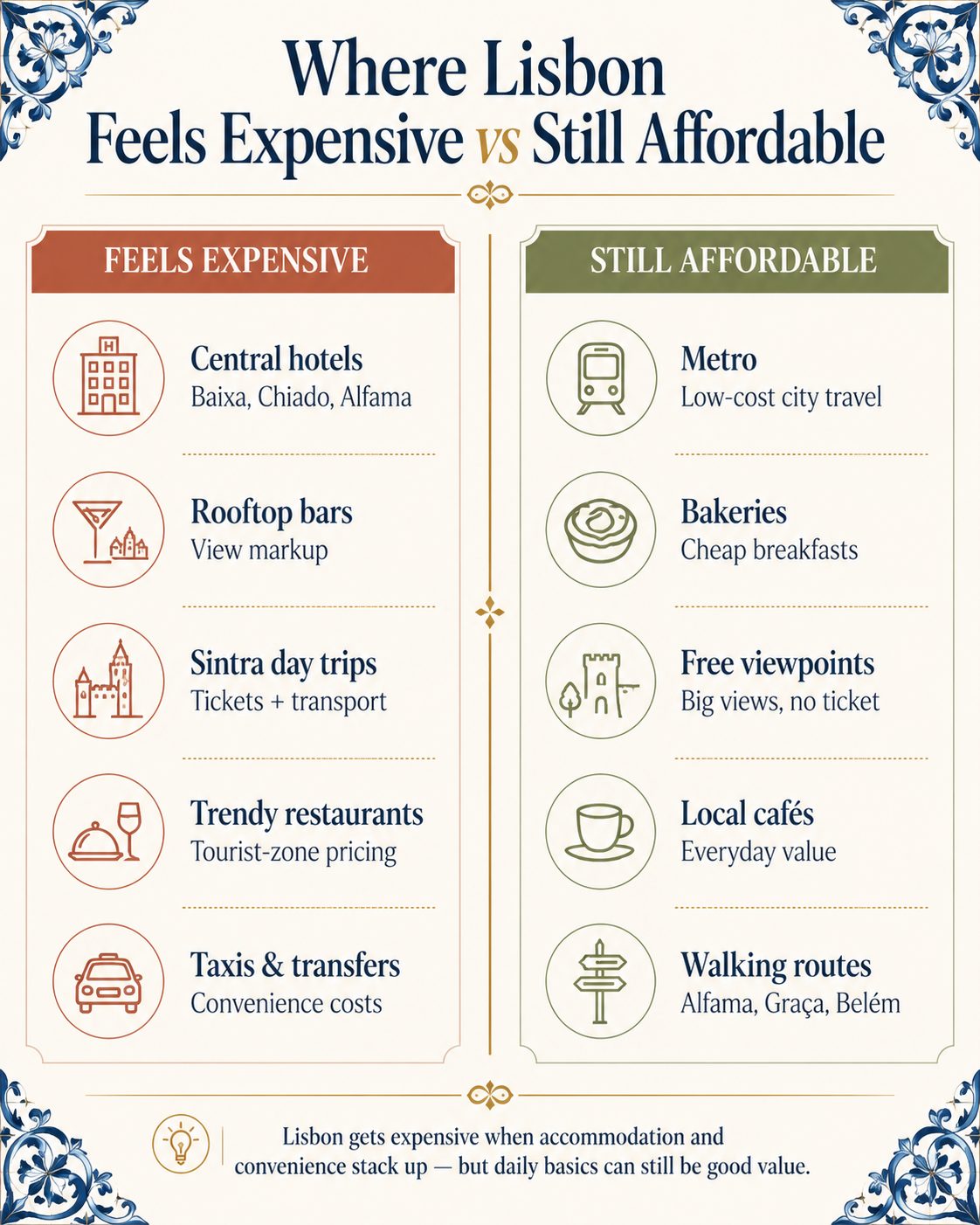
What Is Still Affordable in Lisbon?
Lisbon still has a lot of value if you do not insist on the most polished version of everything. The city rewards walkers, public transport users, early hotel bookers, bakery-breakfast people, and travelers who can enjoy a miradouro without needing a cocktail beside it.
- Use the metro for airport and city travel when practical
- Stay near transport rather than only chasing the historic core
- Eat lunches in local restaurants away from main tourist streets
- Balance paid attractions with free viewpoints and long walks
- Plan Sintra as a paid day instead of pretending it is a cheap add-on
- Book accommodation early for spring, summer and weekends
Metro, Buses and Trams
Public transport is one of Lisbon’s strongest value points. A Carris/Metro single ticket is around €1.90, while a 24-hour Carris/Metro ticket is around €7.25. For a sightseeing day with several movements, that often makes far more sense than repeated taxis.
The old trams have atmosphere, but they are not always the fastest or calmest way to move. Treat them as part transport, part experience. The metro is usually more useful when you genuinely need to get somewhere.
Airport Access by Metro
Lisbon Airport is unusually convenient for budget arrivals. The airport has metro access, and the route toward central Lisbon can take around 20 minutes to the Saldanha area. For travelers with manageable luggage and normal arrival times, a private airport transfer is often unnecessary.
There are fair exceptions. Late arrivals, heavy bags, children, mobility issues, or awkward accommodation locations can make a taxi sensible. But many visitors pay for convenience before checking how easy the metro would have been.
Cafés, Bakeries and Simple Restaurants
Breakfast is not where Lisbon should hurt you. Bakeries and local cafés can keep mornings cheap: coffee, pastry, sandwich, juice, a quick counter stop before the city gets too hot. Simple restaurants still offer value, especially at lunch and outside the most obvious visitor routes.
The trick is walking a little. Not heroically far. Just far enough that the menu stops trying to translate Lisbon into a postcard.
Free Viewpoints and Walkable Neighborhoods
Lisbon gives away some of its best material. Miradouros in Graça and around the old hills. Alfama streets in the morning. The downtown grid of Baixa. Tile fronts that appear without warning. The Belém riverfront. Gardens, church interiors, small squares, and long walks that turn into accidental sightseeing.

Paid attractions belong in the trip, but they do not need to fill every hour. Lisbon is a city where walking still counts as an activity, even when the calçada disagrees with your shoes.
Lisbon Food Prices
Food in Lisbon is not usually the main reason the city feels expensive. A simple restaurant meal is often around €14, while a mid-range meal for two commonly lands around €50. Coffee remains reasonable by European capital standards, especially in ordinary cafés rather than glossy brunch rooms.
The gap appears by location and mood. Local cafés, lunch counters, neighborhood restaurants, and bakeries can feel like good value. Rooftops, riverfront terraces, restaurants near major viewpoints, polished Portuguese wine bars, and fashionable international brunch places can make Lisbon feel much closer to Paris or Barcelona pricing than some visitors expect.
| Item | Typical cost | Budget note |
|---|---|---|
| Simple restaurant meal | Around €14 | Usually cheaper away from tourist routes |
| Mid-range meal for two | Around €50 | Higher in rooftops and polished central restaurants |
| Cappuccino | Around €2.30 | Local cafés are usually better value |
| Carris/Metro single ticket | €1.90 | Strong value for city travel |
| 24h Carris/Metro ticket | €7.25 | Useful for heavy sightseeing days |
| Lisbon tourist tax | €4/night | Per person, first seven nights |
One small restaurant note: bread, olives, cheese, or small starters placed on the table may not be free. If you do not want them, decline politely. It is normal. Accepting everything without thinking can add a few euros across the trip.
Lisbon Transport Costs
Lisbon is a city where transport planning can save real money. The metro is clean enough, useful enough, and cheap enough to influence where you stay. Buses and trams fill in the gaps. Trains help with Belém, Cascais, and Sintra depending on the route. Walking works, but the hills have a dry sense of humor.
A 24-hour pass can be worthwhile if you plan several rides in one day. A single ticket makes sense for lighter movement. Taxis are best treated as targeted tools: late night, luggage, mobility, awkward routes, or bad weather. They should not become the default unless the budget comfortably allows it.
Lisbon Attraction Costs
Lisbon can be cheap if you mostly walk and choose one major sight at a time. It becomes expensive when every day is built around paid monuments, museums, guided experiences, and transport shortcuts.
Belém is a useful example. The riverside walk, exterior views, and pastries can be kept fairly light. But once you add Jerónimos Monastery, Belém Tower when open, museums, transport, lunch, and maybe a taxi back, the day becomes a proper budget item.
The Lisboa Card can make sense for travelers who plan to use public transport heavily and visit several included or discounted sights in a short period. It is less useful if your Lisbon plan is mostly neighborhoods, viewpoints, cafés, one paid attraction per day, and slow wandering. Buying a city card to feel organized is not the same as saving money.
Budget Sintra as a full paid day from Lisbon. The train may be affordable, but palace tickets, internal transport, lunch, queues, timed entries, and taxis can quickly turn it into one of the more expensive days of the trip.
Where to Stay in Lisbon for Better Value
The cheapest Lisbon hotel is not always the best value. If the location forces you into taxis, eats your time, or makes every evening awkward, the savings become thinner. The better question is not “Where is cheapest?” but “Where can I sleep at a fair price and still move easily?”
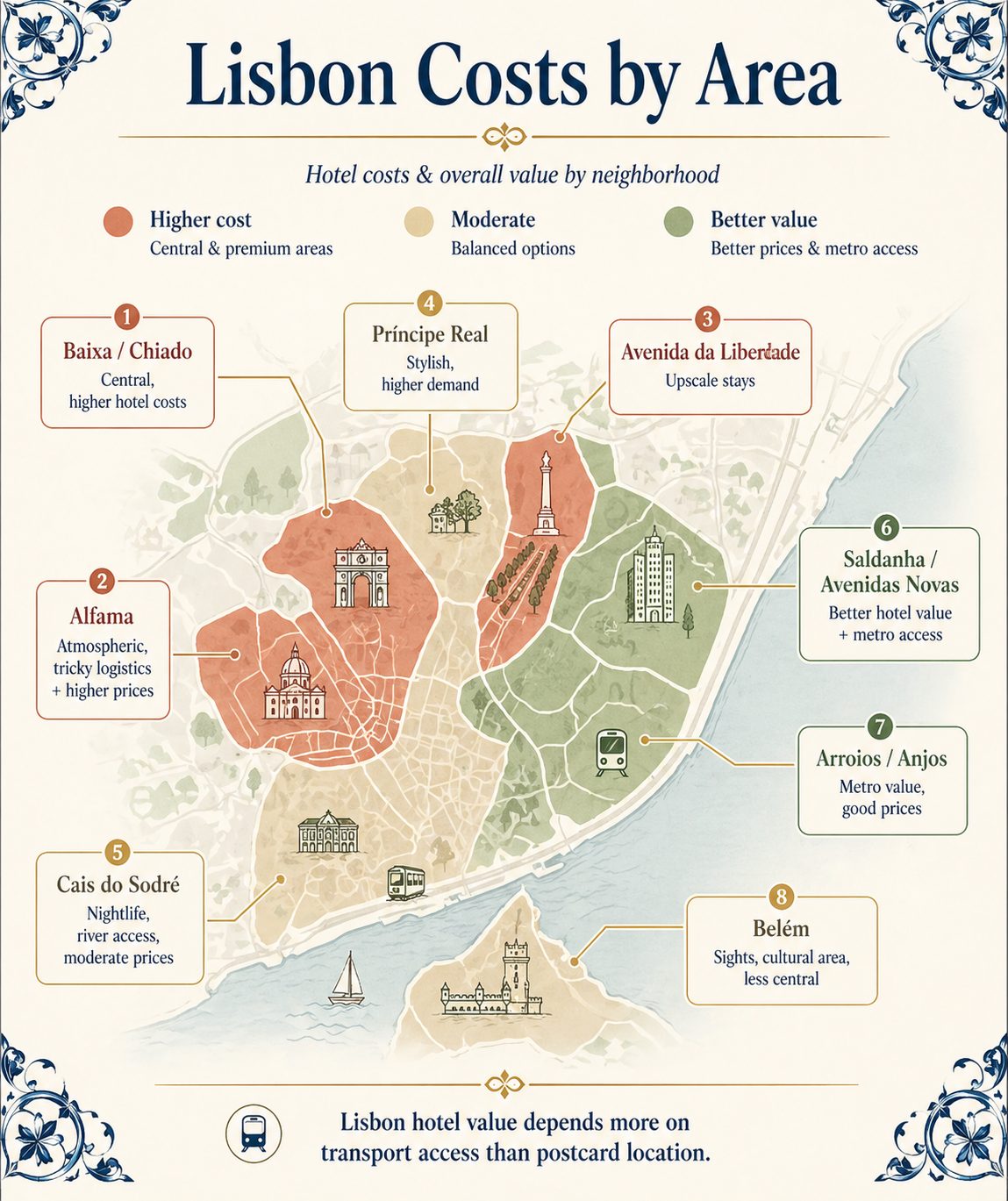
More Expensive Areas
Baixa and Chiado are convenient, central, and easy for first-time visitors. They are also in heavy demand. Alfama has atmosphere, but luggage can be awkward and prices are not always gentle. Avenida da Liberdade has upscale hotels and a polished feel. Príncipe Real is stylish and popular. Cais do Sodré is useful for nightlife and river access, but the area can price itself like it knows that.
These areas can be worth paying for on a short trip. If you only have two or three days, location saves time. Just be honest with yourself: you are buying convenience.
Better-Value Areas Near Metro
Saldanha, Avenidas Novas, Alameda, Arroios, Anjos, and parts of Intendente can offer better value if you choose carefully. These areas are not interchangeable, and hotel quality varies, but metro access can make them practical. You may lose some postcard charm at the hotel door and gain a better nightly rate.
Belém can work for certain travelers, especially if they want a quieter stay near major sights and the river. It is less ideal if your main plan is nightlife, Alfama evenings, or constant old-town wandering.
- Saldanha or Avenidas Novas near metro
- Arroios, Anjos or Alameda with careful hotel selection
- Local restaurants away from main tourist corridors
- Airport metro instead of automatic private transfers
- Central hotels in Baixa, Chiado and Avenida da Liberdade
- Rooftop bars and riverfront restaurants
- Last-minute spring or summer accommodation
- Private Sintra tours and repeated taxi use
Sample Lisbon Trip Budgets
These estimates exclude international flights because airfare changes too much by departure city, luggage rules, airline, season, and booking window. They cover the Lisbon part of the trip: accommodation, food, local transport, attractions, and normal sightseeing choices.
3 Days in Lisbon
A three-day Lisbon trip is short enough that paying more for location can make sense. But the budget still depends heavily on whether Sintra is included. If you add Sintra, treat it as one of the main cost days, not a casual extra.
| Travel style | Estimated cost | Typical setup |
|---|---|---|
| Budget | €220–€300 | Hostel or basic room, bakeries, local food, metro, free viewpoints |
| Mid-range | €450–€650 | Hotel, restaurants, paid sights, public transport, possible Sintra day |
| Premium | €850+ | Boutique hotel, private transfer, guided tour, rooftops, better restaurants |
5 Days in Lisbon
Five days gives you more room to balance costs. You can spend one day in Belém, one in Sintra, one wandering old neighborhoods, one around modern or museum-focused Lisbon, and one slower day with viewpoints and food. Honestly, that rhythm is usually better than trying to turn every day into a paid itinerary.
A budget traveler can keep five days fairly controlled by staying simple and using public transport. A mid-range traveler should expect accommodation to take the largest share. A premium traveler can easily turn Lisbon into a boutique city break where private guiding, wine bars, and restaurants do much of the spending.
Hidden Costs in Lisbon
Lisbon’s hidden costs are not usually dramatic one by one. They build quietly. Tourist tax. A few taxis. Restaurant extras. Sintra transport. A rooftop drink. Baggage fees on a low-cost flight. Palace tickets. Late booking. None of these feels outrageous alone. Together, they explain why the final trip cost can sit higher than expected.
- Lisbon tourist tax of €4 per person per night for the first seven nights
- Sintra palace tickets, shuttle buses, taxis and timed-entry planning
- Low-cost airline baggage fees and seat-selection charges
- Airport transfers if arriving late or staying far from metro access
- Restaurant couvert such as bread, olives, cheese or small starters
- Rooftop drinks, wine bars and tourist-zone restaurants
- Taxis or ride-hailing when the hotel location is awkward
How to Visit Lisbon Without Overspending
The easiest way to save money in Lisbon is not to turn the trip into a punishment. Do not skip every restaurant. Do not walk until the hills defeat you. Do not avoid every paid sight. Just stop buying convenience by accident.
Stay near the metro. Book accommodation early. Use the airport metro if your arrival time and luggage make it reasonable. Eat your best meals intentionally, not because you collapsed at the first terrace beside a crowd. Keep one or two paid experiences that matter, then let the city do what it does well for free.
For many travelers, the best Lisbon budget is not the lowest possible budget. It is the one that spends on the right things: a well-located but not overpriced hotel, one strong food or walking tour, a properly planned Sintra day, and enough room for unplanned coffee, pastry, and viewpoint stops. Lisbon is not a spreadsheet city. It just punishes vague planning.
Final Verdict: Is Lisbon Expensive?
Lisbon is no longer cheap, but it is still manageable with smart planning. It feels expensive when central hotels, peak dates, private tours, rooftops, taxis, and Sintra extras stack together. It feels much better value when you stay near the metro, eat locally, walk often, use public transport, and choose paid experiences carefully.
The city’s best value is not in pretending it is still undiscovered. It is in knowing exactly where the money goes. Spend on location when time is short. Spend on Sintra if you care about it. Spend on one excellent meal instead of several forgettable tourist-menu dinners. Save on airport transfers, over-central hotels, lazy taxis, and restaurants selling only a view.
Lisbon is not cheap anymore. It can still be worth every euro.
FAQ
Is Lisbon expensive for tourists?
Lisbon is moderately expensive for tourists. It is costly by Portuguese standards, especially for accommodation, but still more manageable than many major Western European capitals. The city feels most expensive in central hotels, peak season, rooftops, private tours, taxis, and Sintra day trips.
How much money do I need per day in Lisbon?
Budget travelers should plan around €70–€95 per person per day. Mid-range travelers usually need around €140–€220 per person per day. Premium travelers staying in boutique hotels and using private tours or transfers can easily spend €250–€400+ per day.
Is Lisbon cheaper than Porto?
Porto is often slightly cheaper than Lisbon, especially for accommodation outside the most central riverfront areas. Lisbon usually has higher demand, more international visitors, and stronger hotel pressure. Both cities can become expensive if you stay centrally and travel in peak season.
Is food expensive in Lisbon?
Food in Lisbon can still be good value if you eat in local cafés, bakeries, and simple restaurants away from tourist streets. A simple restaurant meal is often around €14, while a mid-range meal for two commonly sits around €50. Rooftops, trendy brunch spots, riverfront restaurants, and polished wine bars cost more.
Is public transport cheap in Lisbon?
Yes. Public transport is one of Lisbon’s best value points. A Carris/Metro single ticket costs around €1.90, and a 24-hour Carris/Metro ticket costs around €7.25. Staying near the metro can reduce the need for taxis and private transfers.
Is Sintra expensive as a day trip from Lisbon?
Sintra can be affordable if you keep the day simple, but it often becomes expensive once palace tickets, shuttle buses, taxis, lunch, and guided tours are included. It is best to budget Sintra as a full paid sightseeing day rather than a cheap side trip.
What is the cheapest area to stay in Lisbon?
The cheapest useful areas are often not the historic core but metro-connected neighborhoods such as Arroios, Anjos, Alameda, Saldanha, or Avenidas Novas. Prices vary by hotel quality and date, so the best value usually comes from balancing nightly rate with easy transport access.
What is the most expensive part of visiting Lisbon?
Accommodation is usually the most expensive part of a Lisbon trip. Central hotels in Baixa, Chiado, Alfama, Avenida da Liberdade, Príncipe Real, and Cais do Sodré can raise the budget quickly, especially during spring, summer, weekends, and major events.