
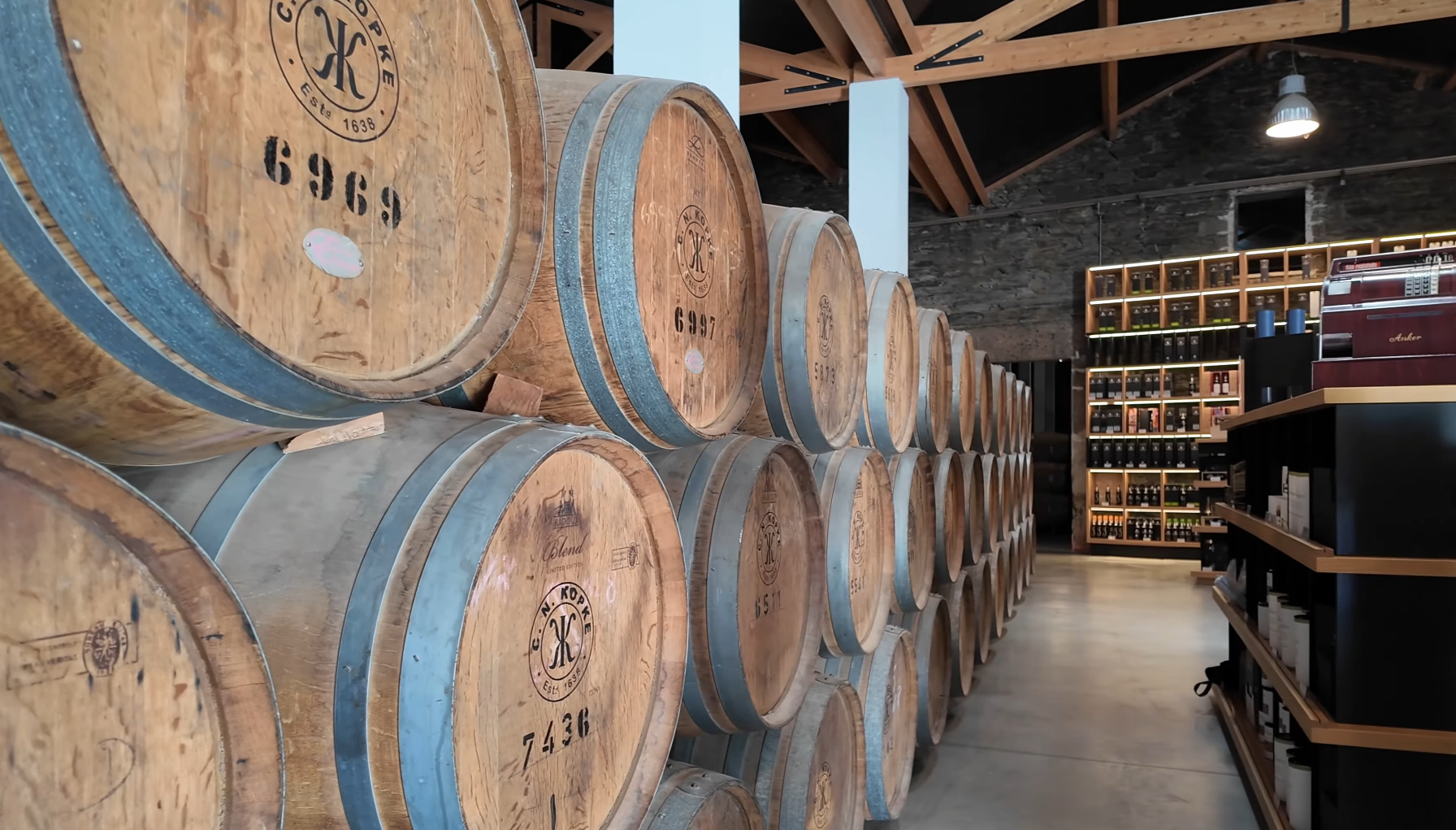
The first thing you notice near the lower deck of Dom Luís I Bridge is not the view. It is the smell. River stone after rain, a little boat fuel from the Douro, then that cool cellar breath coming across from Vila Nova de Gaia: old oak, damp masonry, sugar-dark wine, and schist dust trapped in the memory of barrels. Porto performs from the riverfront, all tile, iron, steep lanes, and laundry flicking above the cafés. Gaia works. Gaia stores. Gaia teaches Port to calm down.
This review looks closely at the porto walkers port wine tour beside the wider Gaia tasting scene, using the things that actually matter once you are standing there with a glass in your hand: route, tastings, price, guide quality, walking effort, and whether the experience explains Port or just pours it. I think that distinction matters more in Porto than in almost any other wine city. A lazy tasting turns Port into sweet red syrup. A good one shows why the Douro’s heat, schist terraces, and grapes such as Touriga Nacional, Touriga Franca, and Tinta Roriz can give you black plum, orange peel, walnut skin, and that old-library smell I never quite trust until the second glass.
Gaia Port Tasting at a Glance: Timing, Prices, Grapes, and Walking Style
Our Methodology
We judged these tours the way a wine traveler should: by what gets poured, how clearly it is explained, and whether the logistics still feel sane after fortified wine starts doing its quiet work. We gave more credit to real Gaia cellar context, proper Port education, and small-producer access than to polished tasting rooms that feel detached from the Douro.
Douro Schist, Gaia Lodges, and Why Port Refuses to Behave Like Table Wine
Port begins far from the tasting rooms, in the Douro Demarcated Region, a northeast Portuguese wine country of roughly 250,000 hectares split across 3 sub-regions. The landscape is not soft. Summers burn. Schist soils give almost nothing away. Terraces cut into the slopes like ribs, and the old socalcos, those pre-1860 stone-supported vineyard steps, look romantic only if you have never had to farm them under August sun.
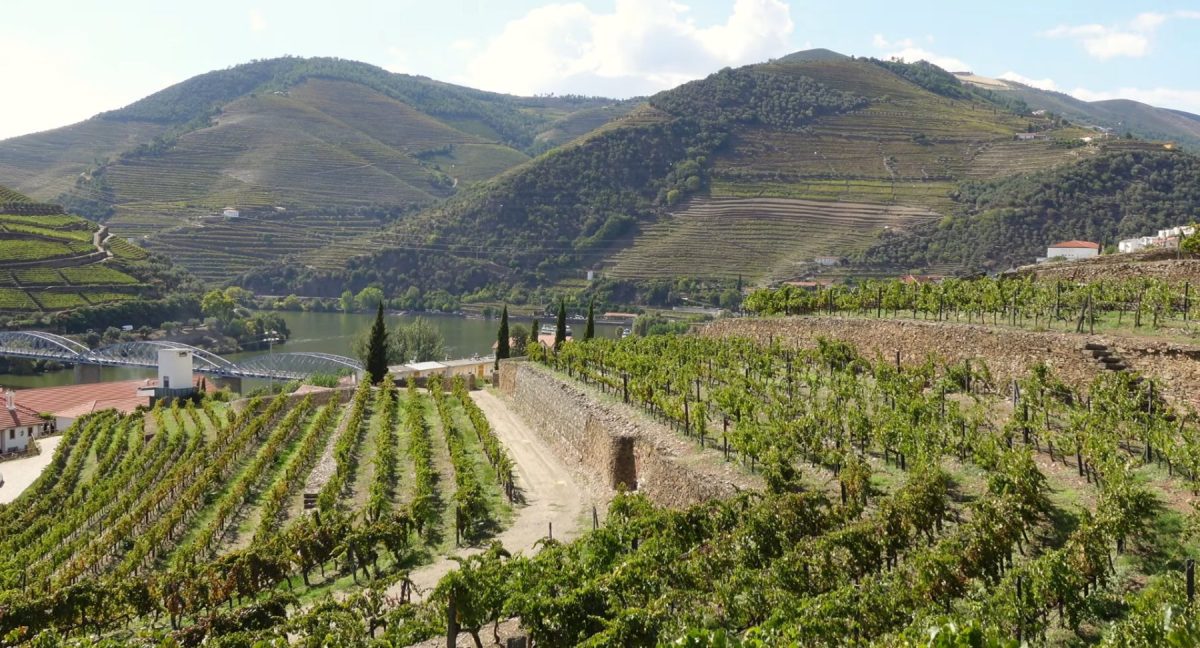
That pressure ends up in the glass. Touriga Nacional brings color, violet lift, and tannin that grips before it melts. Touriga Franca gives flesh and dark fruit. Tinta Roriz, the Douro name for Tempranillo, adds red-fruit spice and a useful backbone. In the old lagar, grapes were foot-trodden before fortification, preserving sweetness while keeping the wine’s muscle intact. Then Gaia took custody. The river-facing lodges became the finishing school, the place where young Douro wine learned ruby brightness, tawny oxidation, LBV depth, vintage austerity, and the slow manners of wood.
“O vinho nasce na vinha; na cave só se educa.” The wine is born in the vineyard; in the cellar, it is only educated.
That line gets the Porto Walkers idea right. You are not wandering through vines. You are walking through Port’s archive.
Myth vs. Reality
A common misconception is that a Port wine tour in Porto means going out to the vineyards. The truth is plainer and more useful: the Porto Walkers Port Wine Tour is a Vila Nova de Gaia cellar-and-tasting route of about 1.5 km on foot, with 3 Port venues and 7 tastings, while the Douro Valley vineyards sit about 90 minutes away by car or roughly 2 hours 20 minutes by train to Pinhão or Pocinho.
Side-by-Side Data: Which Gaia Port Tour Suits Your Kind of Traveler?
| Tour Name | Best For (Traveler Profile) | Primary Region / Focus |
|---|---|---|
| Porto Walkers Port Wine Tour: 3 Gaia Venues, 7 Port Tastings | First-time Porto visitors who want guided Port education without a Douro day trip | Vila Nova de Gaia cellars, 1.5 km walking route, 3 venues |
| Porto: Port Wine Tour with 7 Port Tastings | Platform bookers wanting free cancellation, English guidance, and structured logistics | Gaia cellar district with 7 tastings and entrance to 3 venues |
| Port Wine Tour: 3 Cellars, 7 Tastings, 12 Participants Maximum | Travelers who prefer a tighter small-group format | Gaia producers within about 400 meters |
| Graham’s 1890 Lodge Guided Tour with Main Tasting Room or Vintage Room Upgrade | Premium tasters who prefer one historic lodge and seated tasting | Single Gaia lodge, premium Port focus |
| Cockburn’s Working Lodge Tour with 3-Port Tasting | Travelers who want oak barrels, vats, and working-cellar atmosphere | Cockburn’s Gaia lodge, 1.5-hour visit |
| Cálem Cellars Guided Tour with Interactive Museum and Port Tasting | Beginners, rainy-day planners, and museum-style learners | Accessible Gaia riverfront lodge |
| Burmester Cellars Classic, Premium, Tawny, or Douro Tasting | Travelers wanting a short cellar visit near the lower deck of Luiz I Bridge | Central Gaia lodge, tasting tiers from €22 to €35 |
Best Overall in Gaia: Porto Walkers Finds the Sweet Spot
1. Porto Walkers Port Wine Tour: 3 Gaia Venues, 7 Port Tastings
Ideal for: First-time Porto visitors who want a guided, social, English-language explanation of Port styles without losing a full day to the Douro Valley. Skip this if: You need guaranteed entry to a specific famous lodge, because the route changes according to venue availability and a certain Port house cannot be promised.
The Porto Walkers tour wins because it understands what most people need in Gaia: context, comparison, and enough tasting range to stop Port from feeling like one sticky category. It starts at 15:00 at the lower level of Luis I Bridge on the Porto side, by the big pillars of the old Ponte Pênsil, then crosses into Gaia for a tight 1.5 km route. That distance sounds minor. After seven fortified wines, it becomes excellent planning.
The rhythm works. First, an operating historical wine cellar with 2 tastings. Then a small producer’s venue with 1 tasting. Finally, a professional tasting-room workshop with 4 more pours. What surprised us most was how quickly the sequence trains the palate. Ruby stops being “the sweet red one.” Tawny begins showing dried orange, walnut skin, old wood, and that faint bitter snap that makes it sing with queijo or a square of dark Portuguese chocolate.
“In Gaia, we do not rush Port,” a guide told us near the river. “The Douro gives the wine its muscle. The lodge teaches it manners.”
The official price sits around €55 tax included, which puts it above a basic single-lodge tasting but far below premium Graham’s tastings that can rise from €60 to €135 per person. The value is in the spread: 3 venues, 7 Port wines, and a guide structure that teaches buying logic rather than turning the afternoon into a sugar parade. Bring water. Bring a snack. Porto Walkers says so, and frankly, they should print it in bigger type.
- Wear shoes with grip because Gaia’s pavements, cellar thresholds, and bridge approaches can turn slick.
- Eat before the 15:00 start; Port is fortified, sweet, and stronger than ordinary table wine.
- Leave dinner loose unless you are comfortable with a late Portuguese meal.
- Do not build your expectations around one named lodge; the route shifts with availability.
- Strong tasting volume with 7 Port wines across several styles.
- Efficient Gaia route with only about 1.5 km of walking.
- Useful Port education for travelers who want to buy bottles later without guessing.
- No guaranteed named Port lodge because venue availability can change.
- The operator’s advice to bring water and a snack deserves real attention.
Six More Gaia Port Tours Worth Checking Before You Commit
2. Porto: Port Wine Tour with 7 Port Tastings
Ideal for: Travelers booking through a major platform who want free cancellation, skip-the-line structure, English guidance, and a highly reviewed Porto Walkers product. Skip this if: Uneven surfaces or walking difficulty are a problem, because the listing says it is not recommended for people with walking disabilities or wheelchair users.
This version overlaps heavily with the Porto Walkers structure but packages the experience for travelers who prefer booking through a large platform. The framework is solid: English live guide, 4 hours, 7 wine tastings, entrance to 3 venues, and a route that starts on the Porto side before moving into Vila Nova de Gaia’s historic cellar district.
It feels more managed than a casual tasting crawl, which I mean as praise. A guided museum or cellar visit at a prestigious Port house sets the tone with 2 tastings, then the route moves to a small producer and finishes at a final producer. The review profile gives confidence too: 4.9 out of 5 from 414 reviews, with strong English-language satisfaction. The drawback is still underfoot. Gaia is old stone, slopes, thresholds, and damp corners. Wine districts rarely care about ankles.
- Strong review profile with 4.9 out of 5 from 414 reviews.
- Excellent fit for English-speaking travelers, with 93% of English-speaking guests giving a perfect score on the listing.
- Includes food tastings according to the platform inclusion list.
- Minimum numbers apply, so cancellation is possible if the group does not fill.
- Adult pricing applies to all travelers, and unaccompanied minors are not allowed.
3. Port Wine Tour: 3 Cellars, 7 Tastings, 12 Participants Maximum
Ideal for: Travelers who prefer a tighter small-group format and want to compare different Port producers within a short Gaia walking radius. Skip this if: You are often late, because the tour starts at the scheduled time and joining after the start is not possible for logistical reasons.
This is the compact option, and I like it for that. It begins in Vila Nova de Gaia at Av. de Diogo Leite 135, then keeps the 3 producers within about 400 meters, or 0.25 miles. That one figure tells you almost everything. Less walking. More glass time.
The wine list is unusually transparent: 1 Rosé, 1 Dry White, 1 White Reserva, 1 Tawny Reserva, 1 Tawny 10 Years, and 2 Ruby Late Bottled Vintage wines. That is a good lesson in freshness, oxidation, wood age, reserve structure, and LBV fruit without forcing anyone into a lecture. No food or appetizers are included, which is not a crime, but do not arrive hungry unless you want the tawny to start negotiating with your knees.
- Very low walking burden, with producers grouped within about 400 meters.
- Clear tasting lineup across white, rosé, tawny, and ruby or LBV styles.
- Maximum group size of 12 participants gives it a more personal feel.
- Starts in Gaia, not central Porto, so travelers must handle the bridge crossing themselves.
- Food and appetizers are not included.
4. Graham’s 1890 Lodge Guided Tour with Main Tasting Room or Vintage Room Upgrade
Ideal for: Travelers who care more about one premium historic lodge, views, and polished tutored tasting than a multi-stop walking route. Skip this if: You want the easiest riverside route, because Graham’s sits higher in Gaia and reaching it from Dom Luís I Bridge can involve roughly 1 km of walking with uphill sections.
Graham’s is for the traveler who wants depth over range. The Main Tasting Room starts from €30 and pours 3 classic Graham’s Ports: Six Grapes, LBV, and 10 Year Old Tawny. The Vintage Room shifts the register, with premium tastings from €60 to €70 and a Symington tasting at €135. Pricey? Yes. Sometimes justified.
The experience is slower, more seated, and more polished than the walking tours. You come for the old-lodge glow, the view over Gaia, and the seriousness of aged Port. Not every traveler needs that. If the words vintage Port and old tawny make you pause mid-sentence, Graham’s is one of the better splurges in the city.
- Strong premium ladder from entry tasting to old tawny and vintage Port.
- Excellent for serious tasters who want focus instead of many stops.
- Memorable Gaia viewpoint setting.
- Premium tastings can climb quickly, reaching €135 per person.
- Less producer variety than a 3-venue walking tour.
5. Cockburn’s Working Lodge Tour with 3-Port Tasting
Ideal for: Travelers who want a working-cellar atmosphere, oak barrels, vats, and a chance to see traditional lodge craft. Skip this if: Seeing coopers matters to you and you can only visit on a weekend, because Cockburn’s notes its in-house coopers work Monday to Friday.
Cockburn’s has a more physical mood: workshop first, showroom second. It is described as the largest wooden Port cellar in Vila Nova de Gaia, and the visit leans into oak, vats, barrels, and the maintenance work that keeps a lodge alive. The standard visit lasts about 1.5 hours, making it easy to fit before lunch, after lunch, or between two more ambitious plans.
When the cooperage side is active, the place feels properly inhabited. Wood dust. Barrel hoops. The low, sweet smell of oxidizing wine sitting in timber. I would not choose it for the broadest tasting education, but for cellar craft and atmosphere, it has teeth.
- Real working-lodge atmosphere with proximity to barrels and vats.
- Possible weekday view of in-house coopers repairing oak barrels.
- Shorter format makes it easy to fit into a half-day Porto plan.
- Time slots may shift during busy high-season days.
- Single-producer format gives less comparative tasting range than Porto Walkers.
6. Cálem Cellars Guided Tour with Interactive Museum and Port Tasting
Ideal for: First-time Port drinkers, rainy-day planners, and travelers who want an easy Gaia riverside cellar visit with museum-style interpretation. Skip this if: You want a small, quiet, sommelier-style session, because Cálem is one of the most accessible and popular Gaia cellar experiences.
Cálem is the safe beginner choice, and sometimes safe is exactly right. The location is easy from Dom Luís I Bridge and the Gaia riverfront, and the format blends interactive museum material, Douro and Port explanation, cellar context, and tasting. On a wet Porto afternoon, when the pavements shine and your umbrella keeps turning inside out, that indoor structure starts looking clever.
The risk is crowd energy. A polished, accessible cellar can feel more processed than personal, especially when groups stack up. Still, for someone learning why tawny does not behave like ruby, or why fortification changes everything, Cálem gives a clean first lesson at around €22 on recent ticket platforms. No shame in starting there.
- Very easy location on the Gaia riverfront.
- Strong for beginners because of the interactive museum layer.
- Good indoor option during Porto rain.
- More mainstream and potentially busier than small-producer tasting rooms.
- Less intimate than a 12-person specialist walking tour.
7. Burmester Cellars Classic, Premium, Tawny, or Douro Tasting
Ideal for: Travelers who want a short, central, easy-to-reach Gaia cellar near the bridge with several clear tasting tiers. Skip this if: You are booking before 30 April 2026, because Burmester lists a maintenance closure from 1 November 2025 to 30 April 2026 and redirects visitors to Cálem.
Burmester has one of Gaia’s easiest positions, close to the lower deck of Luiz I Bridge. Normal tasting tiers run from a Classic Tasting with 2 Port wines for €22 to premium and pairing options with 3 Port wines, chocolate, or regional sweets, generally around €23 to €35.
When open, it is useful for travelers who want a short, historical, low-effort cellar visit without climbing higher into Gaia. The maintenance closure is the catch. For early-season planning, that is not a tiny operational note. It changes the day.
- Excellent bridge-side location for low-effort logistics.
- Clear pricing tiers from basic to tawny-focused.
- Good choice for travelers who want pairings without a long walking route.
- Maintenance closure affects availability until 30 April 2026.
- Less producer variety than multi-lodge walking tours.
Field Notes from Gaia: Shoes, Snacks, Seasons, and Small Mistakes to Avoid
Insider Insight
Eat before the 15:00 Porto Walkers tour and carry water, because 7 Port tastings in 3.5 to 4 hours is a serious fortified-wine session, not a breezy table-wine sip. The sweetness masks the strength, and the walk back across the Douro gets strangely philosophical when lunch was only an espresso and a pastel de nata.
The best months are April to June and September to October. September has harvest electricity in the air, even when the tour stays in Gaia; the Douro is picking fruit, the wine city feels awake, and conversations about Touriga Nacional and old lagar work land with more force. July and August bring heat and crowds. November to February can be calmer, but rain makes shoes, timing, and patience more important.
- Choose April to June for gentler walking weather and lighter crowd pressure.
- Choose September if harvest atmosphere matters more than quiet streets.
- Choose November to February for fewer people, accepting rain and shorter daylight.
- Avoid building the day around a specific named lodge unless you book that lodge directly.
One more thing, because people get this wrong all the time: Gaia is not the Douro Valley. From Porto, the Gaia cellar district is about 5 minutes on foot across the bridge. The Douro Valley is about 90 minutes away by car. That difference changes the whole trip: price, time, footwear, expectations, and how much Port you should taste before trying to order dinner in Portuguese.
Booking Questions Travelers Ask Before a Porto Walkers Port Wine Tour
Is the Porto Walkers Port Wine Tour actually in Porto or Gaia?
It starts on the Porto side of the lower Dom Luís I Bridge, then takes place in Vila Nova de Gaia. The route covers about 1.5 km of walking through the Gaia Port lodge district.
How many Port wines are included?
The Porto Walkers tour includes 7 Port wines across 3 Port wine venues: 2 tastings at an operating historical cellar, 1 tasting at a small producer’s venue, and 4 tastings in a professional tasting-room workshop.
Is this a vineyard tour into the Douro Valley?
No. This is a Gaia cellar and tasting tour. The Douro Valley vineyards are about 90 minutes away by car, while the Gaia cellars are about 5 minutes on foot across the bridge from Porto.
Is the tour suitable for people with mobility issues?
Usually no. The tour involves walking, uneven surfaces, and cellar access, and the platform version states that it is not suitable for people with mobility impairments or wheelchair users.
What is the best month to book a Port wine walking tour in Porto or Gaia?
September is strongest for wine atmosphere because it lines up with Douro harvest season, while April to June offers milder weather and more manageable crowds. July and August are hotter and busier around the Gaia waterfront and bridge routes.
Final Verdict: Choose Gaia for Port Education, Not Vineyard Romance
The porto walkers port wine tour is the strongest overall choice for travelers who want a grounded, efficient, well-paced introduction to Port without giving up a full day to the Douro Valley. It is not vineyard romance. Good. It is more useful on a first visit: a walk through Gaia’s cellar logic, from historical lodge to small producer to tasting workshop, with enough ruby, tawny, white, and aged character to make Port finally click. After that, go wider: the mineral whites of northern Portugal, the volcanic vineyards of the Atlantic islands, or the terraced reds of the Douro itself.